
In Val d’Isère, the first instinct is often the same: strap on your alpine skis and set out to explore the ski area.
Yet, just a few minutes away from the hustle and bustle of the ski lifts, there is another mountain. It’s quieter, wilder, and more intimate.
Welcome to the world of Nordic skiing.
Cross-country skiing isn't just "skiing on flat ground"
Forget your preconceptions about this sport,
Cross-country skiing is a surprisingly well-rounded sport. It helps develop balance, gliding technique, coordination, and endurance, and offers a sense of freedom quite different from downhill skiing.
And most importantly, everyone can practice it in their own way.
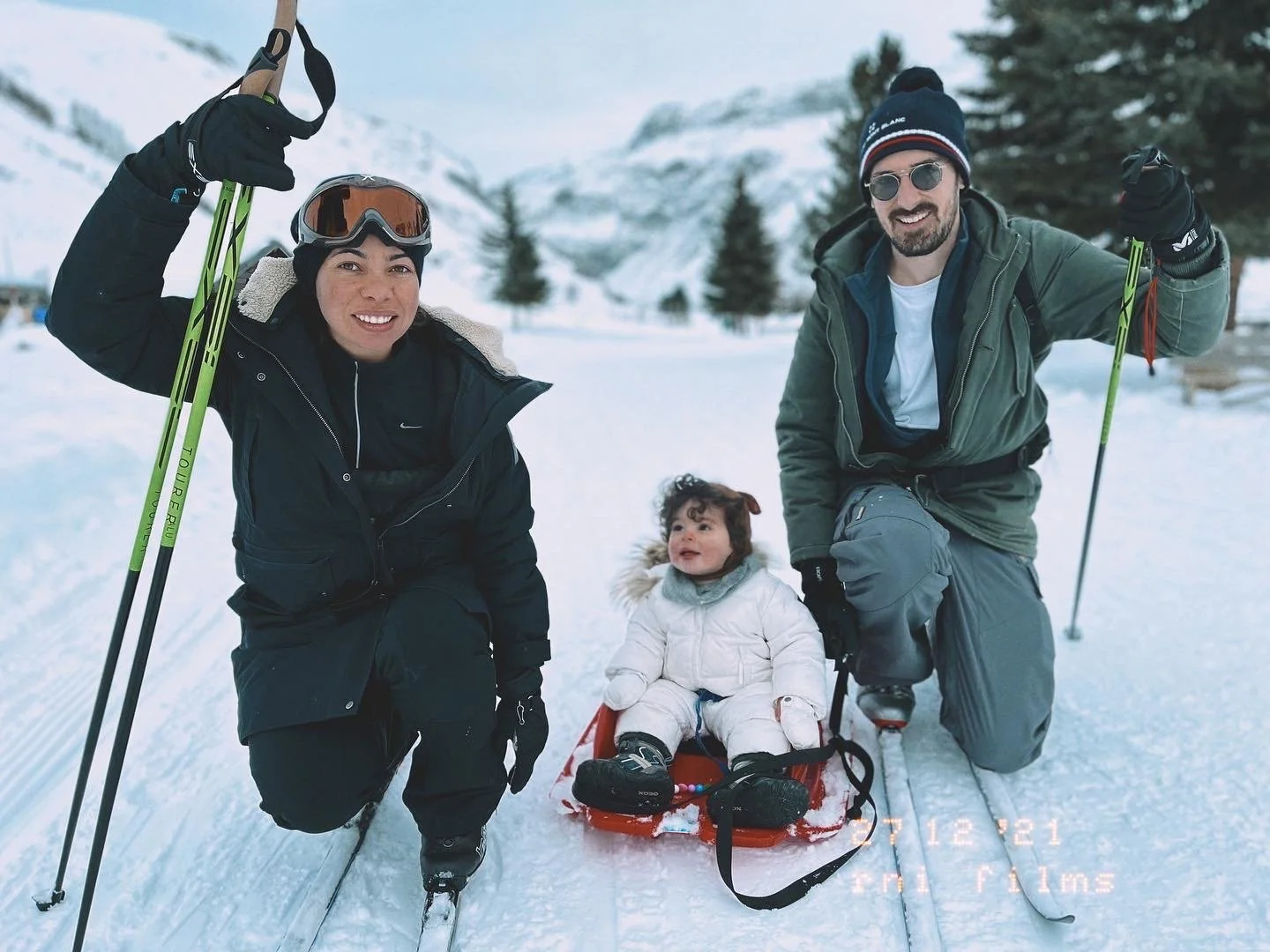
You can go for a leisurely walk, learn a new technique, enjoy an activity with your family, or turn your outing into a full-fledged workout.
That's also what makes cross-country skiing so interesting: with the same pair of skis, two people can have two completely different experiences.
Classic or skating?
There are two main techniques.
The Classic
The skis generally remain parallel and are used primarily on specially groomed trails.
The motion is quite natural and allows you to gradually discover Nordic skiing. It’s an excellent way to get started.
Skating
This is the technique that is recognizable by its skating-like motion.
More dynamic and technically demanding, skating quickly gives you a wonderful sense of speed and glide.
And contrary to what one might think, you don't have to be an expert to get started, but you do need to know the basics.
A beginner can start skating right away with an instructor and make rapid progress by learning a few basic techniques.
"I already ski, so this should be easy…"
That's often when things get interesting.
Even a very good downhill skier can feel like a beginner again for a few minutes when putting on cross-country skis.
The skis are thinner. The boots are much more flexible. The heel is free. And your balance changes completely.
This temporary loss of bearings is actually part of the fun.
We rediscover sensations we had sometimes forgotten: finding our balance, understanding how skis glide, mastering our first real skating stride…
Then everything starts to flow more smoothly.
"I'M NOT A SPORTS PERSON—IT'S IMPOSSIBLE"
This is a situation we see all the time: a complete beginner—sometimes someone who isn’t even very athletic—can improve faster at cross-country skiing than a very good downhill skier.
Why? Because he doesn't rely on muscle memory.
Alpine skiers already have many reflexes: weight distribution, body position, how to turn, and how to maintain stability. But with narrower cross-country skis, flexible boots, and—above all— a completely free heel, some of these habits can become… bad habits.
Conversely, someone who has never skied before listens, experiments, and immediately develops the correct techniques. They are less likely to try to replicate what they already know and are more willing to let themselves glide.
And cross-country skiing has a few surprises in store: the fittest or best downhill skier in the group isn't necessarily the one who picks it up the fastest.
How about adding a rifle?
That's where biathlon comes in.
The concept seems simple: combining physical exertion with precision shooting.
Actually, the contrast is pretty awesome.
You arrive at the firing line with your heart racing. Suddenly, you have to slow down, control your breathing, steady your body, aim… and then pull the trigger.
A few seconds later, it's time to head out again.
It is this balance between physical exertion and precision that makes biathlon particularly fun.
And you don't have to be an athlete to give it a try.
At Nordic Base, the introductory session lets you gradually learn the basics of shooting before moving on to challenges, relays, and small competitions.
Whether you're with family or friends, certainties tend to disappear pretty quickly: the most athletic person isn't always the one who wins.
Cross-country skiing also lets you discover a different side of VAL D’ISÈRE
That might actually be the most interesting part.
Cross-country skiing or snowshoeing lets you completely change your pace.
No more chairlifts.
No more rushing from one lift ride to the next—we move at our own pace, in silence, with plenty of time to take in our surroundings.
And during a trip focused mainly on downhill skiing, this little break is often just what the doctor ordered.
Is it suitable for children?
Yes.
Cross-country skiing is actually a particularly good way to get started in winter sports.
Younger children can start with very simple games: walking, sliding, turning, falling, getting back up…
Starting at age 4 or 5, children can begin to get familiar with skis on suitable terrain. Then, the learning process can gradually become more structured while still remaining a lot of fun.
At Nordic Base, biathlon is offered for children ages 8 and up, with age-appropriate equipment and exercises.
And for parents, there's a significant benefit: a Nordic activity can easily become an experience that the whole family shares together.
Is it a physical issue?
The best answer is probably: as much as you want.
An outing can be anything from a leisurely stroll to a full-on workout.
It is up to the instructor to adapt the location, duration, exercises, and intensity to the group.
For athletes, cross-country skiing is actually a great way to build endurance. For everyone else, there’s no need to turn your vacation into Olympic training.
What should I wear?
A common mistake is to dress exactly as you would for a day of downhill skiing.
When cross-country skiing, you generate much more heat.
It's best to wear several relatively lightweight layers, a breathable jacket, gloves, goggles, and a hat or headband.
The principle is simple: it's often better to be a little chilly at the start than to be much too hot ten minutes later.
Discover Nordic Sports with Nordic Base
Nordic Base offers classic cross-country skiing, skating, biathlon, and snowshoeing sessions in Tignes for beginners and experienced participants alike.
Private lessons, family sessions, group classes, or more athletic sessions: we tailor the experience to your skill level and preferences.
Do you have a question about your skill level or which activity is right for you? Contact us. We'll help you choose.
